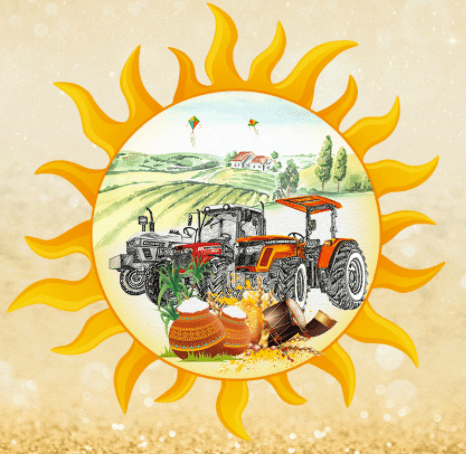
Makara Sankrathi is one of India’s major festival. This festival falls on the first day of Magha Maasa (January) where the Sun transitions from Dakhshinayan (Tropic of Capricorn) to Uttarayana (Tropic of Cancer), hence this festival is celebrated following the solar calendar.
India, being an agriculture oriented country for ages, Sankranthi festival is intended to celebrate at the time of receiving new crops and dedicated to our annadathas (farmers) and agriculture. This festival is celebrated for 4 days cherishing and thanking each little detail that helps us get the food we eat i.e. God, 5 elements of life that make farming possible, farmers, money to afford the food (goddess Lakshmi), animals that participate in farming, family etc.
This festival is celebrated in various places of India with different names but with the same essence as mentioned above:
- Sankranthi/ Makara Sankranthi in Andra Pradesh, Telangana, Bihar, Karnataka, Orrisa
- Pongal in Tamil Nadu
- Lohri in Punjab
- Bihu in Assam
- Uttarayan in Gujrat
- Khichdi in Uttar Pradesh etc.
Here is one way how we celebrate Makar Sankranthi in Andra Pradesh and Telangana.
Celebrations
Day 1: Bhogi
The most important things to do for this day are:
- Bhogi Mantalu: A sacred bonfire lit up with old wood or furniture present in the house and agriculture waste. This fire is lit before sunrise / during bhrami muhurtam. Small or large groups of people gather and set this bonfire praying for the welfare of society.
- Significance: The old/ waste from the house are burnt in this ‘Bhogi Mantalu’ with the intention to destroy the darkness and negativity in one’s life and pray for brighter days ahead.
- Bhogi Pallu: This is a tradition, where people pray to Lord Vishnu for the well-being and prosperity of kids. On the evening of Bhogi day, kids in the family are dressed up well and made to sit on a decorated chair. The women in the family then give the harathi to these kids and all the elders present in the house shower ‘Bhogi Pallu’ (mixture of Reggi {Indian Jujube} fruits, flowers and coins) and bless them.
- Significance: It is believed, that showering the Bhogi Pallu and getting the blessings of elders will remove any ‘Nara doshas’/ any sorts of negative energies that are effecting the kids.
- Bommala Kolluvu: People on the Bhogi evening, create a 3/5/7/9 wooden steps and place a variety of traditional dolls (Bommalu) depicting the puranas, one’s home town, agriculture, festivals etc. These steps should not be used for any other purpose except storing books after the kolluvu. Bommalu Kolluvu can be arranged by married, unmarried women or kids in the family. After placing the bommalu, one should light the diya (holy lamp), offer naivedyam, sing the bhajans or kolluvu specific paatalu (songs) and explain their importance to the kids. This kolluvu is kept for 3 days and people invite family and friends over to take the darshan.
- Significance: Placing the idols of Gods and Goddesses signifies inviting them to your house (kolluvu) and praying for one’s prosperity. Also, this is a rich tradition to pass on our cultural heritage to the next generations.
Note : Look into some DIY videos here to get some ideas for Bommala Kolluvu.
Day 2: Makara Sankranthi
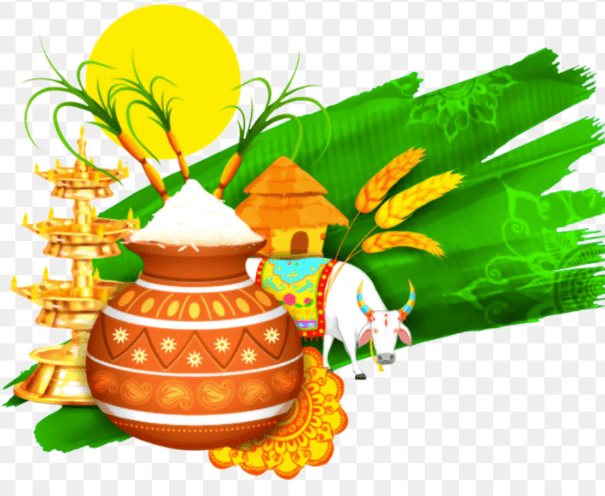
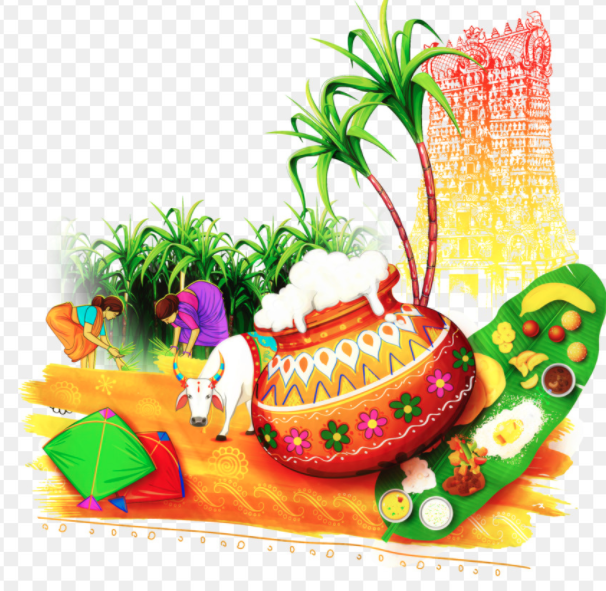
Makar Sankrathi is also known as ‘Pedda Panduga’. This day is considered as the major day of the festival and Pongal is made as naivedhyam with the recently harvested rice and offered as a tribute to our ancestors.
Major activities done on this day:
- Wake up early in the morning and do Tailabyanganam (apply oil to the body and take shower).
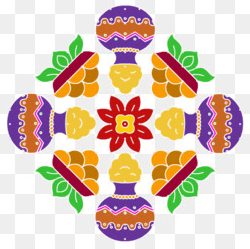
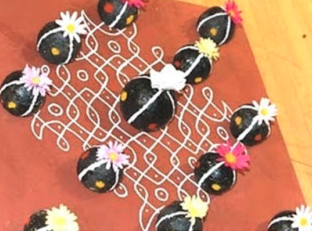
- Women in the house make big colorful Rangoli/Muggulu in the front yard of the house and place Gobbiammalu (small balls of cow dung) in the center of the Rangoli.
- One Should finish their-regular worship (nitya pooja) and later offer special prayers to Annapura Devi (goddess of food), Lakshmi Devi (goddess of wealth) and Lord Surya (sun).
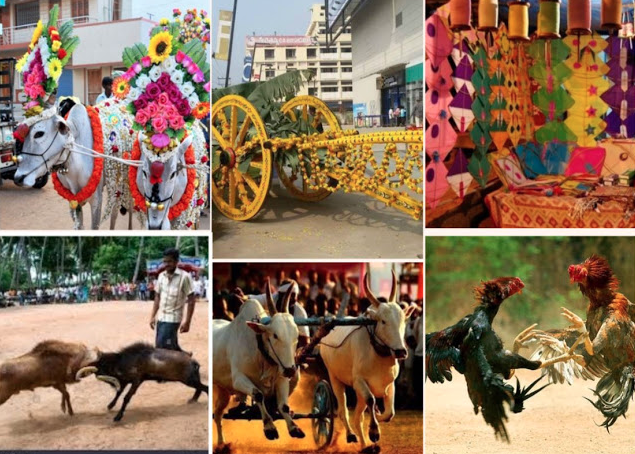
- In villages and some cities, people have a Gangireddu mellam visiting their house (an ox decorated and brought by its owner, who plays a musical instrument “sanayi” and ask for alms) even today and people contribute money and grains to this mellam.
- You can also find Haridasulu on this day. Haridasulu are people dressed as Lord Vishnu’s servants in a saffron attire and carry a small veena and chirutalu (musical instruments) singing the glory of the lord. They also go from home to home asking for alms and people offer them grains and money into the vessels that they carry on their head. This vessel is called the akshaya patra and has a mythological significance.
- People usually visit friends, relatives and also invite them to their home on this day.
- Evening of Sankranthi is usually celebrated by flying kites/Patang. Sankranthi is celebrated as a patangula panduga i.e. festival of kites in many places.
- In villages, sports like bulla cart races, rangoli contest, bull fights, cock fights, kite flying competitions etc. are played even today.
Mythological Importance:
1: According to Gita (the holy book for Hindus), 6 months of Uttarayanam are considered as day and 6 months of Dakshinayanam as night for the deity (Gods). So, the day for the deity starts today which is why it holds a special place for people to start their spiritual works.
2: It is also believed that today was the day when Lord Krishna showed one of his leelas by lifting the Govardhan Parvat (mountain Govardhan) on his tiny finger. On this day, Lord Indra was so furious that he started heavy winds and strong rains, which made the people of the Gokul village worried. They sought for the help of Lord Krishna, who then lifted the mountain and rescued all the villagers under its shade and protected them from this calamity. Lord Indra saw this and understood that Lord Krishna is none other than Lord Vishnu himself and stopped outpouring his anger realizing his mistake.
3: On this day, it is also believed that Muni Bhageeratha, as a result to his intense penance, got a boon. He brought the Ganga to patal (hell) just to offer his respects to his ancestors who were captivated there by sage Kapila’s curse.
4: It is also believed that Bhishma Pitamah waited for 58 days and left his body on this auspicious day of Uttarayana as it is said that the ones who die in Uttarayana are released from the cycle of births and deaths.
5: The Muggulu / Rangoli
- Rangoli made on these days are not merely a decoration to the front yard of the house but also believed that they prevent the negative energies from entering the houses.
- People draw these beautiful Rangolis to invite Goddess Lakshmi to their house.
6: Gobbiammalu are made up of cow dung. People place them in the middle of the rangoli and offers pasupu (turmeric), kumkum, flowers and akshanthalu (only some) as it wards away negative energies that are present in the house. Scientifically, Gobbiammalu can prevent mosquitoes and insects from entering the house.
7: Today, the sun enters the Uttarayana and into the sign of saturn (Shani). It is also known as the day when the father and son meet as Lord Shani is the son of Lord Surya. People offer special prayers for getting the blessings of these mighty planets that might affect their stars.
8: Kites are not just for fun, they are a form of worshipping Lord Surya.
Day 3: Kannuma
Everyone, especially farmers, offer their prayers and thank the cattle that help the farmers on this day. The cows and other cattle animals are decorated and fed well.
Major Activities Done on this day:
- One should wake up early and finish the nitya pooja.
- If possible, go to a ‘goshala’ and offer the services and donations there.
- On this day, people usually eat “Garelu” as there is a famous saying “kannuma roju minnumulu tinali” which translates to eating urad dal and garelu which are made using minnumulu on kannuma day.
Link of Garelu in an air fryer: https://youtu.be/IwupjBdb0z8
Day 4: Mukkanuma
On the last day of the festival, people gather with their friends and family, have lovely feasts and fly kites. The farmers do special prayers to the Panchabuthas (5 essential elements of life) for better harvests. People also do charity work on this day as it is believed that the charity done on these 4 days is more fruitful then any time of the year.
Special Naivedyams prepared on these 4 days:
- Ariselu
- Pongal: Find the recipe here – https://youtu.be/IFgSdg_RKjU
- Kheer
- Appalu
- Kajjikayalu
- Chikki
- Pulihora: Find the recipe here – https://youtu.be/ElaI1RS3Y4Y
- Garelu: Find the recipe here – https://youtu.be/IwupjBdb0z8
Let me know how you celebrated this Sankranthi in the comment section below.
Also follow me on Instagram or on Facebook. Thanks!
Stay Blessed and Have a Happy Sankranthi !!!!
 "Fun"da of Festivals
After reading this article, I recolcted my childhood days at my Native place “Chrnnuru ” and school days at “Machilipatnam.” …..We used to go picture newly released during festival time great hero’s NT Ramarao, Nageswararao etc. …. and enjoy with friends and relatives ….Those days are golden days ….
LikeLiked by 1 person
Excellent
LikeLiked by 1 person